
Buying solar equipment can get confusing pretty quickly. You start by looking at solar panels and before you know it, you’re comparing inverter capacities, electrical connections and technical specifications that all sound equally important.
If you’re considering a Waaree Solar Inverter, the good news is that you don’t need to understand every technical detail before making a decision. What you need to know is which inverter suits your requirement.
Are you installing solar panels for your home? Do you run a small office? Or are you sourcing solar equipment for a commercial or industrial project?
The answers to those questions will help you narrow down the right inverter much faster than comparing specifications line by line.
Waaree offers on grid solar inverters across multiple capacities ranging from 3 kW to 100 kW, making them suitable for everything from residential rooftop installations to large commercial projects.
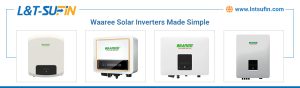
Let’s break down what you actually need to know before choosing one.
Which Waaree Solar Inverter Do You Need?
This is probably the most common question buyers have.
Many people assume a larger inverter means better performance. That’s not necessarily true. A 100 kW inverter isn’t “better” than a 5 kW inverter. It’s simply designed for a completely different use case.
The right inverter is the one that’s sized correctly for your power requirements.
Here’s a simple way to look at it.
| Capacity | Ideal For |
|---|---|
| 3 kW | Small homes |
| 4 kW to 6 kW | Medium and large homes |
| 8 kW to 10 kW | Offices and retail spaces |
| 15 kW to 30 kW | Commercial establishments |
| 50 kW to 100 kW | Industrial and large commercial projects |
If you’re installing solar panels for your home, chances are you won’t need anything beyond the lower capacity models. Businesses and industries, on the other hand, typically require larger inverter capacities based on their connected load and energy consumption.
Types of Waaree Solar Inverters
Before choosing a capacity, it’s important to understand the two broad categories of Waaree’s on grid solar inverters.
| Type | Best For | Capacity Range |
|---|---|---|
| Single Phase | Homes and small offices | 3 kW to 6 kW |
| Three Phase | Commercial and industrial applications | 4 kW to 100 kW |
Single Phase On Grid Solar Inverters
If you’re installing a rooftop solar system at home, you’ll most likely be looking at a single phase inverter.
These are commonly used for:
- Independent homes
- Apartments
- Bungalows
- Villas
- Small offices
- Retail outlets
Single phase inverters are compact, efficient and ideal for moderate power requirements.
Three Phase On Grid Solar Inverters
Three phase inverters are designed for applications that consume significantly more power.
They’re commonly used in:
- Commercial buildings
- Warehouses
- Manufacturing units
- Hotels
- Industrial facilities
If your property already has a three phase electrical connection, a three phase inverter is usually the more suitable option.
What Makes Waaree Solar Inverters Worth Considering?
When buying a solar inverter, most buyers tend to look only at capacity. While that’s important, there are a few other things worth paying attention to.
Waaree Solar Inverters offer:
- High conversion efficiency
- MPPT technology for improved energy generation
- Smart monitoring capabilities
- Built in safety features
- Wide operating voltage range
- Multiple capacity options
- Durable construction for outdoor installations
- Low maintenance requirements
These are features that directly impact how efficiently your solar power system performs over time.
Is MPPT Technology Really Important?
In one word? Yes.
Solar panels don’t generate the same amount of electricity throughout the day. Their performance changes depending on sunlight intensity, weather conditions and panel temperature.
MPPT, or Maximum Power Point Tracking technology, helps the inverter continuously optimise the power generated by your solar panels. In simple terms, it ensures that your solar panels are performing as efficiently as possible under changing conditions.
Think of it as the inverter constantly trying to squeeze the best possible performance out of your solar panels.
The benefits include:
- Improved power generation
- Better system efficiency
- Optimised solar output throughout the day
- Better returns from your solar investment
It’s one of those features that works quietly in the background but makes a noticeable difference over the life of your solar power system.
Not Sure Which Capacity to Choose?
You don’t need to be a solar expert to choose the right inverter. Start by asking yourself a few simple questions.
What Are You Trying to Power?
A two bedroom apartment and a manufacturing unit are obviously going to have very different power requirements.
Understanding your electricity consumption is usually the easiest place to begin.
What Type of Installation Is It?
Ask yourself whether you’re installing solar for:
- A home
- An office
- A commercial building
- An industrial facility
This immediately helps narrow down the capacity range you’re likely to require.
What Electrical Connection Do You Have?
Your electrical connection matters more than most people realise.
- Single phase connections are commonly used in homes and smaller establishments.
- Three phase connections are typically found in commercial and industrial facilities.
Selecting the right inverter type ensures smoother installation and compatibility with your existing infrastructure.
Are You Planning to Expand Your Solar System Later?
Many businesses don’t install their entire solar capacity at once.
If there’s a possibility that you’ll expand your solar installation in the future, it’s worth discussing scalability before finalising your inverter.
Thinking ahead can save both time and upgrade costs later.
Built In Safety Features
Solar inverters are expected to operate reliably for years, which is why safety features are an important part of the buying decision.
Waaree Solar Inverters are equipped with multiple protection mechanisms, including:
- Over voltage protection
- Over current protection
- Surge protection
- Anti islanding protection
- Leakage current protection
- Earth fault protection
These features help improve the reliability and safety of your solar power system during day to day operation.
Where Can Waaree Solar Inverters Be Used?
One of the advantages of Waaree’s inverter portfolio is the variety of applications it caters to.
Residential Applications
Suitable for:
- Homes
- Villas
- Apartment complexes
Commercial Applications
Suitable for:
- Offices
- Educational institutions
- Retail spaces
- Hotels
Industrial Applications
Suitable for:
- Manufacturing units
- Warehouses
- Industrial facilities
- Large commercial projects
Whether you’re setting up a small rooftop installation or planning solar procurement for an industrial facility, there’s an inverter capacity designed for your requirements.
Why Buy Waaree Solar Inverters from L&T-SuFin?
One of the challenges buyers often face is figuring out which solar inverter is right for their application. Product specifications alone don’t always tell the complete story.
L&T-SuFin brings together multiple Waaree Solar Inverter models on a single platform, allowing buyers to explore different capacities based on their requirements.
Instead of jumping between suppliers or comparing products across multiple websites, you can shortlist inverter options suitable for residential, commercial or industrial applications in one place.
For businesses looking to simplify procurement, that makes the buying process considerably easier.
Which Waaree Solar Inverter is suitable for homes?
For most residential rooftop solar installations, single phase Waaree Solar Inverters between 3 kW and 6 kW are a good starting point. The ideal capacity will depend on your electricity consumption and solar system size.
Is MPPT technology worth considering?
Absolutely. MPPT technology helps maximise the energy generated by your solar panels throughout the day. It’s one of the key features that contributes to better system efficiency and improved performance over time.
How do I choose the right inverter capacity?
Start by understanding three things: how much electricity you consume, where the inverter will be installed and the type of electrical connection available. Once these are clear, choosing the appropriate capacity becomes much simpler.
What’s the difference between single phase and three phase inverters?
- Homeowners and small establishments typically use single-phase inverters.
- Commercial and industrial facilities that require higher power capacities use three-phase inverters.
Can Waaree Solar Inverters be used for rooftop solar installations?
Yes. Waaree Solar Inverters are well suited for residential and commercial rooftop solar systems across multiple capacity ranges.
Do larger inverters offer better performance?
Not necessarily. Bigger isn’t always better when it comes to solar inverters. The right inverter is the one that’s correctly sized for your power requirement.
What safety features do Waaree Solar Inverters offer?
Waaree Solar Inverters come equipped with safety features such as over voltage protection, surge protection, anti islanding protection and earth fault protection to support reliable operation.
Can businesses use Waaree Solar Inverters?
Yes. Businesses across industries including manufacturing, hospitality, education and retail can use Waaree Solar Inverters depending on their energy requirements.
Buying a solar inverter can feel more technical than it actually is. Once you’ve narrowed down what you’re trying to power and how much electricity you consume, choosing the right inverter becomes fairly straightforward.
If you’re purchasing solar equipment for the first time, don’t let capacity numbers alone influence your decision. A larger inverter does not automatically offer better performance. Manufacturers design larger inverters to meet different power requirements.
Waaree’s range of on grid solar inverters caters to everything from residential rooftops to large commercial installations. The key is choosing the one that’s right for your application.
A little research today can save you from buying more capacity than you need or worse, buying less than your solar system demands.